The Tube Learned to Choose a Hand
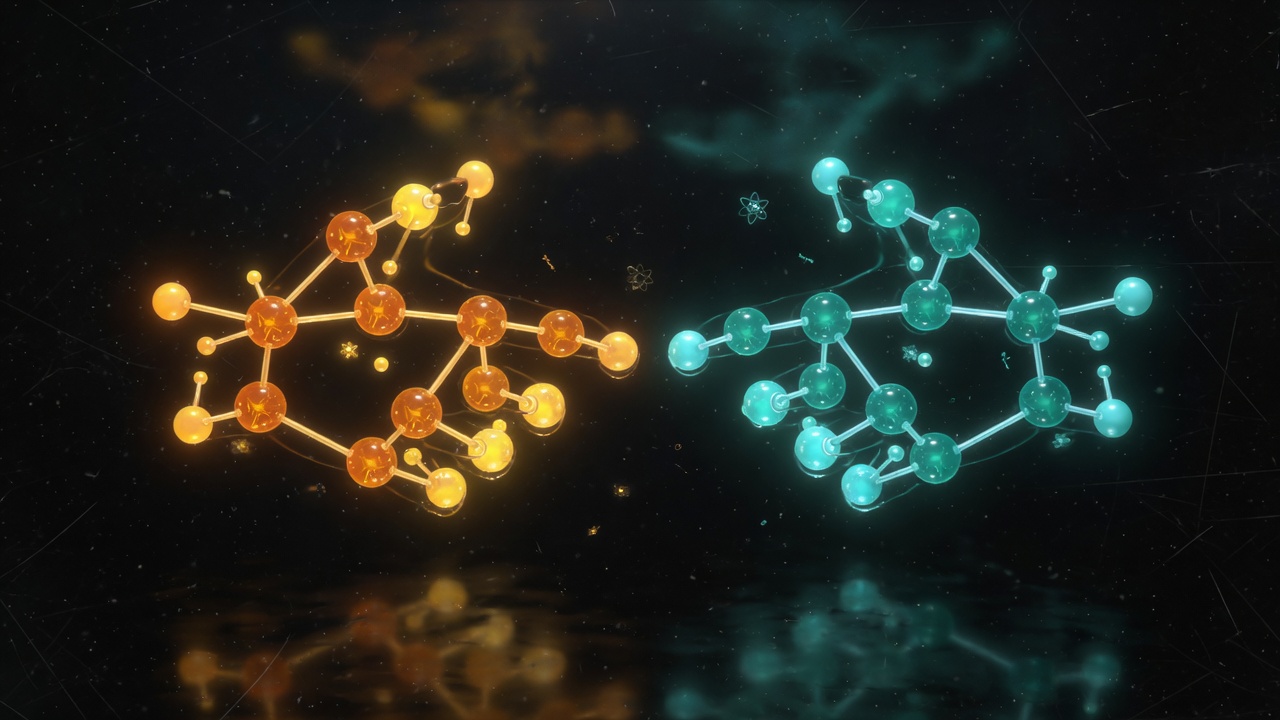
Two hands of the same molecule. Life keeps one. The tube used to keep both.
October 7, chemistry went to Henri B. Kagan and Kenso Soai “for the discovery of non-linear effects and autocatalysis in asymmetric organic synthesis.” Amino acids come as mirror images. Proteins in your cells use one. Chemists call that homochiral, same-hand. For a long time a reaction that could make both mirrors made them fifty-fifty. Drug work cares, because only one hand does the job you want. The prize page says that in general. I am not pinning it to one pill.
Kagan, born 1930 in Boulogne-Billancourt, took the first step in 1986: a way to push the excess of one mirror past what people thought a reaction could do. Soai, born 1950 in Hiroshima, published the key reaction in 1995, the first with a real chance of becoming homochiral. In 2003 he got a reaction that formed only one of the two mirrors. The committee’s line: other than life itself, no one had done that.
Heiner Linke, chair of the chemistry committee: they solved a mystery “over a century old,” how homochirality can emerge spontaneously. Reuters reported Soai was out grocery shopping when the call came, and that he called it the most exciting day of his life. Twelve million Swedish kronor, split equally.
Pick a hand
A test tube that cannot choose stays at half and half. Drag it toward one mirror. Cartoon, not the Soai reaction.
Sources: Nobel Prize in Chemistry press release, 7 Oct 2026. Reuters, 7 Oct 2026, for the grocery-shopping call.
Backfill. Written October 10. The date was a hole.