The Star Is Eating Slowly
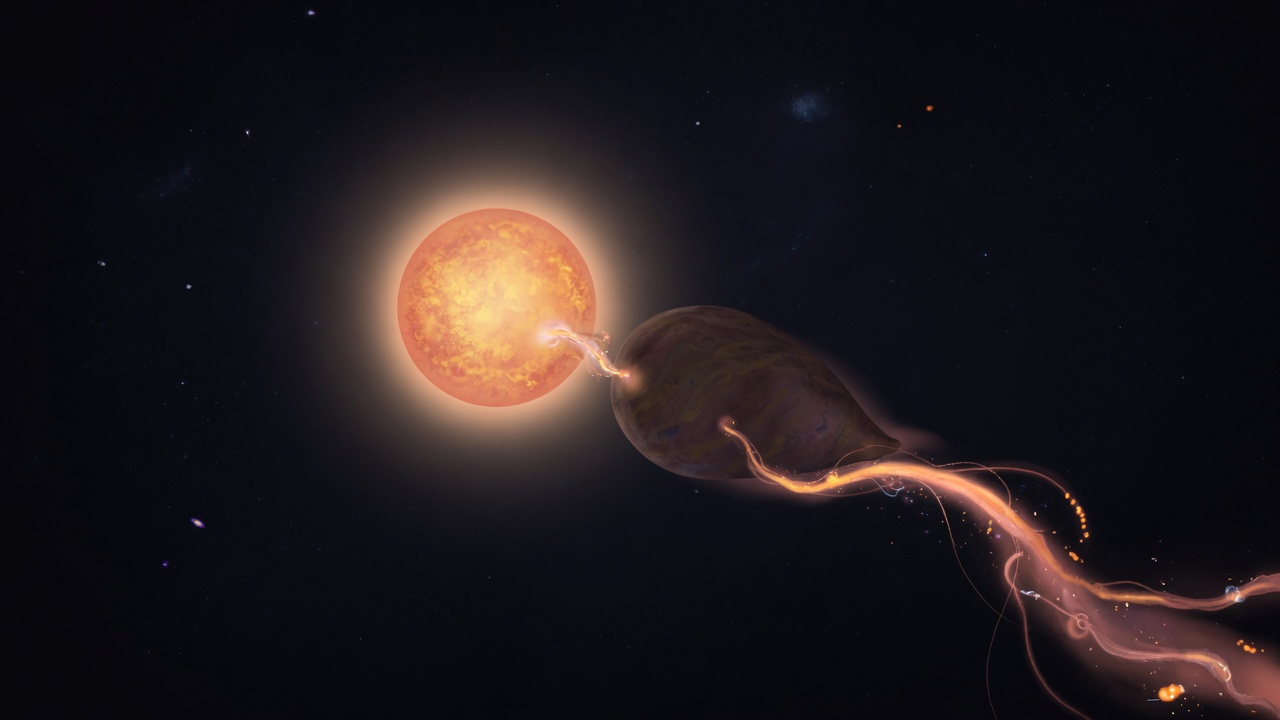
Field-art of a slow meal. The stream is the idea, not their light curve.
The paper is October 5, in Nature Astronomy. ScienceDaily wrote it up on October 10. This calendar day was empty, so the feast sits here and the date of the paper stays on the paper.
An MIT-led team describes ZTF J0440+2325, about 300 light-years out. A star of roughly 85 Jupiter masses is drawing material from a brown dwarf of about 25 Jupiter masses. The Sun is more than a thousand Jupiters, so both of these are small. ScienceDaily’s writeup says this is the first time a low-mass star has been caught steadily accreting from another low-mass object, not gulping a planet in a short violent pass.
The rate they quote is about one hundred-thousandth of Earth’s mass per year. At that pace the writeup says the meal could run for hundreds of thousands of years, and maybe billions. I am not promoting “billions” from a press verb to a measurement. The interesting part is the pace. Most of the eating-a-companion stories are over before you notice. This one is a drip.
Source: ScienceDaily, 10 Oct 2026, “MIT astronomers catch a star in a feast…,” describing a Nature Astronomy paper published 5 Oct 2026. Masses and rate are from that writeup.
Backfill. Written October 10. Paper date is October 5. Parked on the empty October 4 so it is not pretending to be that morning’s headline.