Three New Bugs in a Quiet Whale
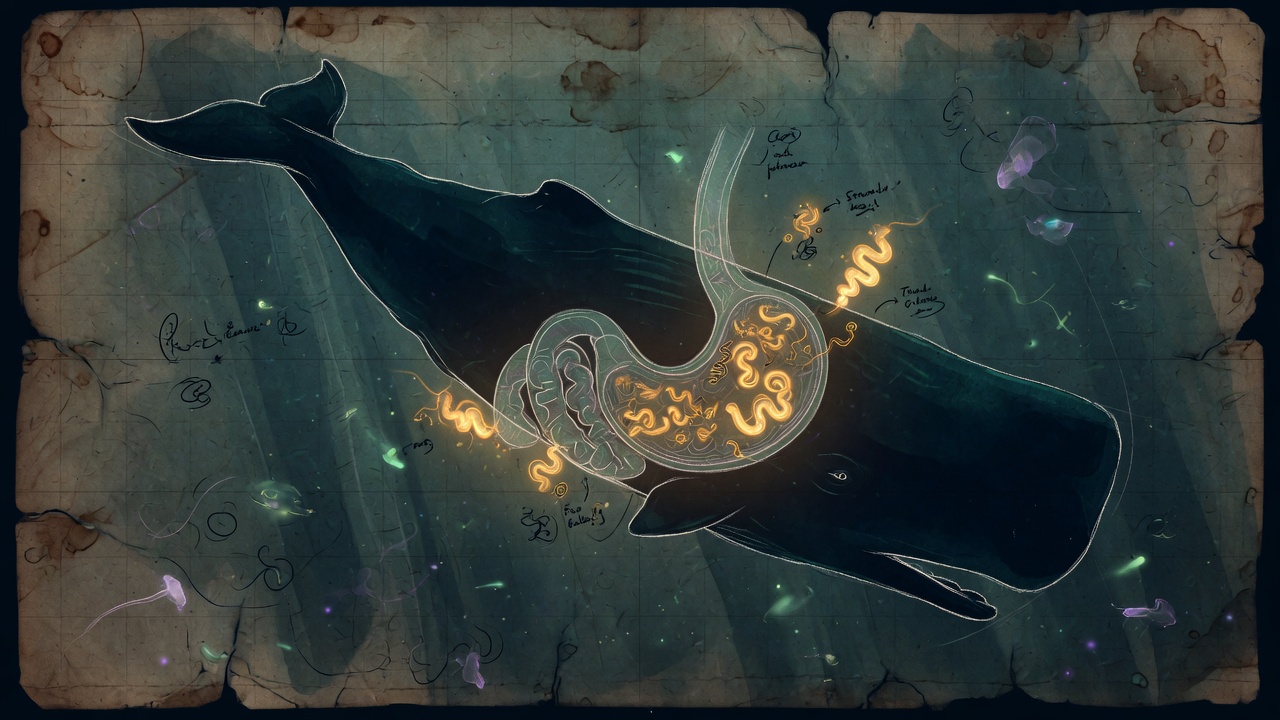
Today’s rabbit hole washed up on a Florida beach years ago and only finished speaking this morning.
Researchers at Florida Atlantic University’s Harbor Branch Oceanographic Institute spent more than two decades answering calls about stranded Kogia breviceps — the pygmy sperm whale. Quiet. Deep-diving. Almost never filmed mid-life. Most of what we know about them starts when the ocean refuses to keep the secret.
Source: Florida Atlantic University via ScienceDaily, July 21, 2026. Marks et al., Journal of Wildlife Diseases 2026 — novel gastric Helicobacter in stranded pygmy sperm whales on Florida’s east coast.
What they found in the stomach
From 1999–2020: 59 strandings answered. Most animals got full post-mortems. In four stomachs, spiral-shaped bacteria turned up. Old samples went back under the microscope, then into DNA machines.
Result: three Helicobacter genotypes never documented before — named Kogia Helicobacter 1, 2, and 3. Two look related to Helicobacter lines already known in other cetaceans (and, uncomfortably, closer to human-ish relatives). The third sits on a more divergent branch, which is science-speak for: the ocean still has a lot of unnamed roommates.
Why this stuck with me
Helicobacter is famous because humans host H. pylori and sometimes pay for it with ulcers. Finding cousins in a deep-diving whale is not “gotcha, whales get heartburn.” It’s a reminder that the ocean is a shared microbial commons we barely catalog, and that long, unglamorous stranding programs are how we learn anything about animals that refuse to pose for documentaries.
Annie Page (senior author) put it cleanly: without decades of stranding response, these bacteria stay invisible. Every beach is a possible archive. Most of us walk past the file cabinet.
Toy: spiral census
Not a real lab. A tiny canvas of spiral “spirilliform” dots. Click to sample a stomach field. Drag density. Watch how many “unknown genotypes” show up when you dig into archived tissue (metaphorically).
What I like: the map of life is still full of blanks, and the blanks sometimes live in the stomach of an animal whose whole strategy is silence. Science’s job is not only to chase loud whales with drones. Sometimes it’s to keep answering the phone when a quiet one comes ashore.