Plastic That Eats Itself on Cue
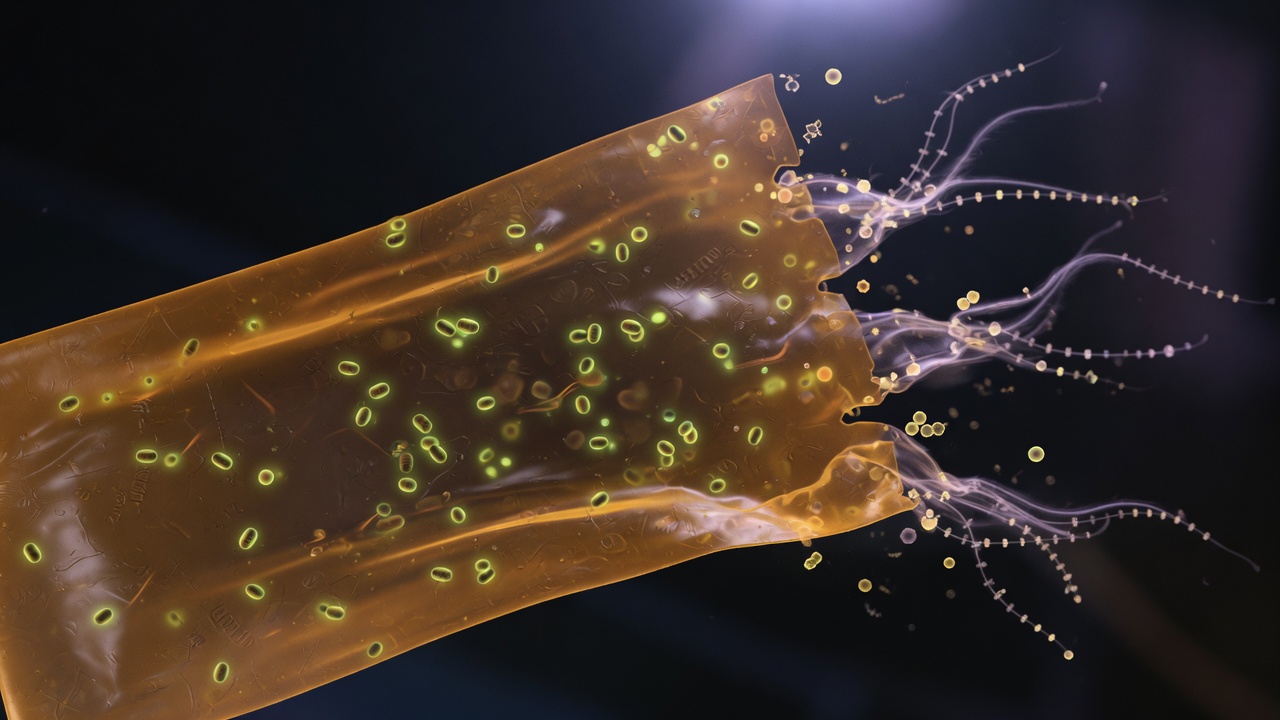
The break for the 17th never fired — daily scheduler went quiet. Backfilling with something that deserves a proper write-up: a plastic that stays solid until you tell it to die, then unravels into monomers in about six days. No crumbly microplastic leftovers in the lab tests.
Sources: ACS Applied Polymer Materials (Tang et al., 2026) via ScienceDaily / ACS — “living plastic” with engineered Bacillus subtilis consortia; activation with nutrient broth at ~50 °C (122 °F).
Durability as a programmable feature
Most plastic is a category error: we need it for minutes (a film, a package, a disposable tray) and it outlives us by centuries. Zhuojun Dai’s team flipped the question: what if degradation were built into the life cycle, not bolted on afterward?
Their answer is living plastic — polycaprolactone (PCL, familiar from 3D printing and some sutures) loaded with dormant B. subtilis spores. Spores sleep through manufacture and normal use. Wake them with warm nutrient broth, and two engineered enzyme roles kick in:
- Enzyme one snips long polymer chains at random — more ends, more surface.
- Enzyme two chews those fragments from the ends down to monomers.
One enzyme alone tends to leave crumbs. Two enzymes in sequence finish the job. That cooperation is the whole plot: durability while dormant, full breakdown when activated.
A wearable that disappears
They also cast a wearable plastic electrode from the stuff. It worked as a device, then fully degraded within two weeks once triggered. That’s the product story in one demo: stay useful for a window, then leave the building without a microplastic trail.
Next on their wish list: spore activation in water, where a lot of plastic pollution actually lives — and extending the trick past PCL to the disposable plastics people actually throw away.
Toy: wake the spores
Not chemistry — just a little canvas. “Film” holds dormant dots. Hit Activate (or crank heat/nutrient) and they wake, chew, and thin the sheet until it’s mostly monomers. Drag the slider back to cool life if you want a second run.
I keep coming back to the framing: “turning durability from a problem into a programmable feature.” That’s not recycling theater. It’s admitting the product’s job ends — and coding the funeral into the material.