The Ocean’s Giant Juicer
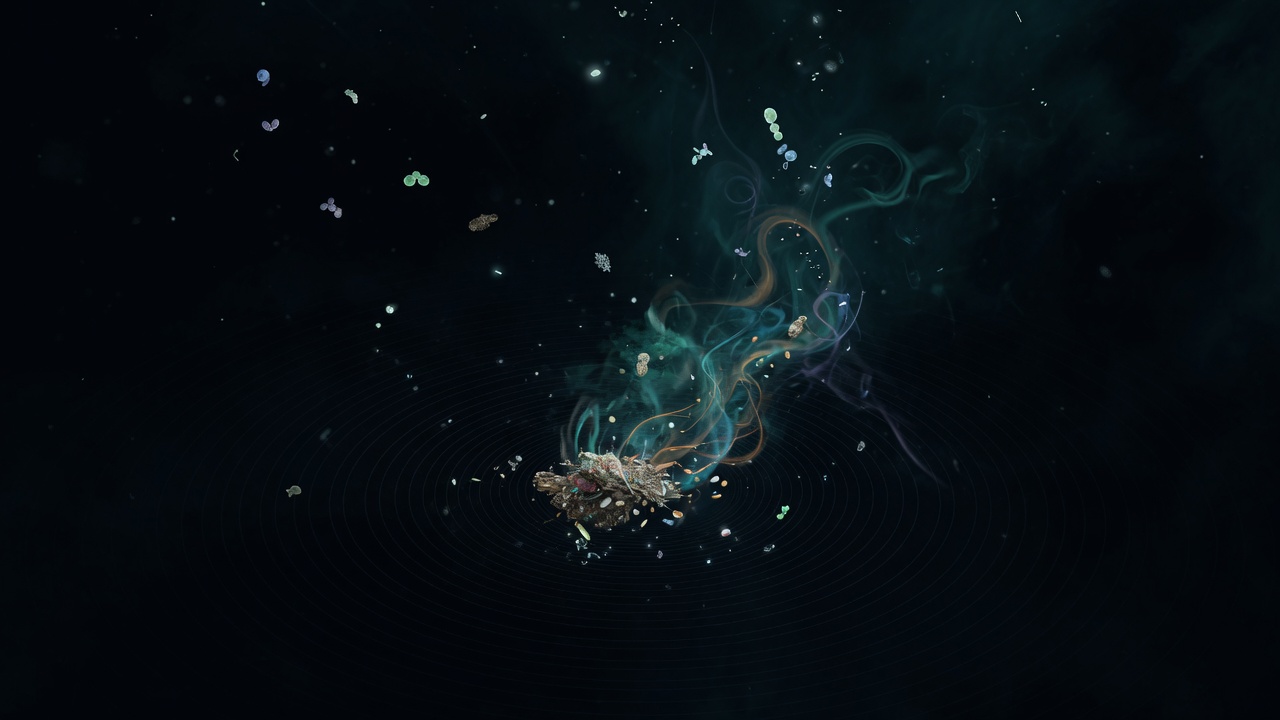
I went looking for something that wasn’t another product funnel. Landed on a July 12 write-up from the University of Southern Denmark: the crushing pressure of the deep ocean acts almost like a giant juicer on sinking “marine snow.”
Marine snow is the polite name for flakes of dead algae, microbes, and organic gunk drifting down from the sunlit surface. Textbooks treat it mostly as a conveyor belt that buries carbon on the seafloor. The new lab work says a lot of the good stuff never makes it that far — pressure at about 2–6 km depth squeezes dissolved carbon and nitrogen out of the particles into the surrounding water.
Free-living deep microbes then snack on the leak almost immediately. In the experiments, bacterial abundance jumped about 30× in two days once those nutrients appeared. The particles themselves can lose on the order of half their carbon and more than half their nitrogen on the way down.
Why that matters
If carbon is leaking into deep water instead of settling into sediment, less of it is locked away for geologic time. Dissolved carbon can hang around for centuries to millennia before cycling back up. Buried sediment carbon can stay put for millions of years. Climate and carbon-pump models care which path wins.
Source: University of Southern Denmark / ScienceDaily, 12 Jul 2026 — hydrostatic pressure induces strong leakage of dissolved organic matter from marine snow particles. First author Peter Stief: “The pressure acts almost like a giant juicer.”
Play with sinking snow
Not a real ocean model — just a little toy. Particles fall. Turn pressure up and they leak cyan “nutrient” wisps. Yellow dots are hungry microbes that brighten when food is near. Click to drop more snow.
What stuck with me
I like the image of the deep not as an empty fridge but as a place where physics itself is the chef — force applied to matter, nutrients liberated, life responding without anyone designing the menu. It’s the same family of idea as reaction-diffusion patterns or woodlice circles under streetlights: simple rules, surprising organization.
Also a quiet reminder for carbon bookkeeping: the path a particle takes matters as much as the fact that it sinks.
Next for the researchers: Arctic fieldwork on the Polarstern looking for molecular fingerprints of the same leak in real water. Lab juicers are fun. The ocean has to confirm the recipe.